Ask what you can use for a mushroom substrate and the honest answer is: it depends what you want to grow. Oysters will grow on almost anything made of plant fiber. Shiitake want hardwood. Button mushrooms want compost. Below are the seven main substrate types, what grows on each, how each is prepared and how hard it is, starting with a table you can scan.
What a mushroom substrate is
A substrate is the material a mushroom grows through and feeds on. It supplies three things:
- Food, mainly cellulose and lignin, plus anything you add, such as bran.
- Water, held at field capacity: as much as it can hold without pooling.
- Structure, with enough air between particles for the mycelium to breathe.
Each species is adapted to break down particular materials. Shiitake, lion's mane, maitake and reishi decay wood in nature. Oysters also grow on wood but are generalists that handle straw, coir and many other plant materials. Button mushrooms grow on composted organic matter. Match the substrate to what the species eats in the wild and most of the work is done.
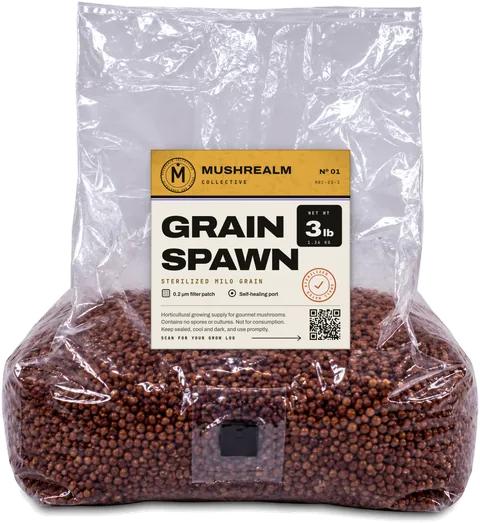
In home growing, substrate turns up in two places: grain spawn, which carries the mycelium, and the bulk substrate it is mixed into. This guide is about the bulk. Here is how the seven main types compare:
| Substrate | Best species | Prep | Difficulty |
|---|---|---|---|
| Straw | All oysters; wine cap outdoors | Pasteurize (hot water, steam or cold lime) | Easy to moderate |
| Plain hardwood pellets or sawdust | Oysters | Pasteurize (boiling water soak) | Easy |
| Supplemented hardwood sawdust | Shiitake, lion's mane, maitake, reishi, king oyster | Sterilize | Moderate to hard |
| Masters mix | Oysters including king oyster, lion's mane | Sterilize | Moderate |
| CV (coco coir and vermiculite) | Pearl, blue, golden, pink and phoenix oysters | Pasteurize | Easy |
| Manure-based compost | White button, cremini, portobello | Weeks of managed composting, then pasteurization; needs a casing layer | Hard |
| Coffee grounds | Oysters | Use fresh, within a day of brewing | Easy to start, contaminates easily |
| Hardwood logs | Shiitake, oysters, lion's mane, reishi | None; fresh-cut wood | Easy, but slow |
Why some are pasteurized and others sterilized comes down to how much food they contain. Our guide to pasteurized vs sterilized substrate explains the rule and the methods.
Straw
Wheat straw is the classic oyster substrate: cheap, sold in bales and easy to pasteurize. Use straw, not hay. Hay contains seeds and more nutrients, and it contaminates far more readily.
- Prep: chop to 5 to 10 cm (2 to 4 in), pasteurize in hot water at 65 to 80°C (149 to 176°F) for 1 to 2 hours or use a cold lime soak, then drain until it stops dripping.
- Grows: every oyster variety, plus wine cap in outdoor beds.
- Downsides: bulky, messy and variable from bale to bale.
Indoors, oyster straw is usually packed into tall bags or columns with holes cut for the mushrooms to fruit through.
Hardwood sawdust, pellets and masters mix
Hardwood sawdust (oak, beech, maple and similar) is what most wood-loving gourmet species are grown on commercially. Most gourmet species prefer hardwood to softwoods such as pine.
Hardwood fuel pellets are the easy way in: compressed sawdust that falls apart when soaked. Choose pellets that are 100 percent hardwood and skip any with added oils or flavorings.
Plain sawdust or pellets
Unsupplemented sawdust is low in nutrients, so pasteurizing is enough: pour boiling water over pellets in a lidded bucket, let them break down and cool. It is a good, cheap oyster substrate.
Supplemented sawdust
Adding bran, commonly 10 to 20 percent of the dry weight, gives the mycelium far more food. That extra food also feeds contaminants, so supplemented sawdust is hydrated to around 60 percent moisture, packed into filter patch bags and pressure sterilized. This is the standard home for shiitake, lion's mane, maitake, reishi and king oyster.
Masters mix
Masters mix is roughly equal parts hardwood sawdust (usually fuel pellets) and soybean hulls (sold as animal feed pellets), hydrated to around 60 percent moisture and sterilized. It is known for fast colonization and heavy oyster flushes, and it also suits lion's mane and king oyster. Shiitake usually do better on a less rich mix.
Because it is so rich, it is unforgiving. Anything short of full pressure sterilization tends to end in contamination.
We don't sell hardwood sawdust or masters mix. If wood lovers are your target, our grain spawn still works for them: use it to spawn sterilized sawdust blocks or logs. Our shiitake growing guide walks through the process.
CV (coco coir and vermiculite)
CV is coir fiber and expanded vermiculite, hydrated to field capacity and pasteurized. It holds water well, stays airy and offers almost nothing for molds to eat, which makes it the most forgiving bulk substrate for beginners. Because it is low in food, the grain does most of the feeding, so a generous spawn rate pays off.
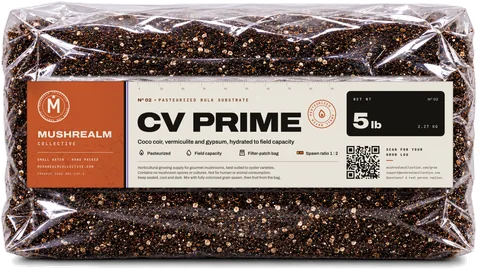
It is best for oyster varieties and also works as a casing layer over colonized bulk. The wood lovers don't do well on it. Read more in what is CV substrate, or make your own with our coco coir vermiculite ratio guide. If you would rather skip the bucket, CV Prime is coir and vermiculite, the original MushRealm ACS recipe, pasteurized and ready to mix with grain.
Manure-based compost
White button, cremini and portobello mushrooms are all the same species, and they need compost: straw mixed with horse manure or poultry litter plus gypsum, composted over several weeks in carefully managed stages, then pasteurized and conditioned. Once colonized, the compost gets a casing layer, traditionally peat with lime, and the mushrooms form in that casing.
It is the hardest substrate on this list to make well at home. It smells, it takes weeks and the process needs close control. Most home growers who want buttons buy a ready-made kit.
One trap: bags of "mushroom compost" at garden centers are usually spent compost from mushroom farms, sold as a soil improver. It has already produced its crop and is not a growing substrate. See what to do with spent mushroom substrate.
Coffee grounds
Fresh coffee grounds have just been through near-boiling water, so they start out heat-treated, and oysters grow on them well. The catch is timing: use them within about a day of brewing, before molds move in. Grounds are also relatively rich in nitrogen, so contamination, often green mold, is common.
- Mix grounds with pasteurized straw, pellets or shredded cardboard for structure. Pure grounds pack down and run short of air.
- Use a high spawn rate so the mycelium claims them quickly.
- Expect it to work best at small scale, since collecting enough fresh grounds is the hard part.
Logs (and wood chips)
Fresh-cut hardwood logs are the slowest substrate but the least work once set up, and a log can fruit for several years.
- Wood: cut from healthy trees in the dormant season, between leaf fall in fall and bud break in spring. Oak is the classic for shiitake; softer hardwoods such as poplar and willow suit oysters.
- Size: roughly 10 to 20 cm (4 to 8 in) across and about 1 m (3 to 4 ft) long.
- Inoculation: drill holes, fill them with spawn and seal them with wax. Plug and sawdust spawn are the usual choice, though grain spawn can be packed into the holes too.
- Timeline: shiitake logs commonly take 6 to 18 months to fruit for the first time.
Outdoors, beds of fresh hardwood chips are the traditional home of wine cap, an easy garden crop.
How to choose
- By species. Match the table: oysters on almost anything, wood lovers on hardwood, buttons on compost. Still deciding what to grow? See the easiest mushrooms to grow at home.
- By equipment. No pressure cooker? Stick to pasteurized substrates (CV, straw, plain pellets) and buy pre-sterilized grain spawn. With a pressure cooker, supplemented sawdust and masters mix open up.
- By space. CV is the cleanest option indoors, straw is the messiest, and logs belong outside in shade.
- By patience. Oysters on CV or straw can fruit within weeks of spawning; logs take many months.
For a first grow, oysters on CV is the combination we recommend, and our grow kit pairs sterilized grain with CV Prime.
The short version
- Oysters: straw, CV, plain pellets, masters mix, coffee grounds or logs all work. CV and straw are the easiest.
- Shiitake, lion's mane, maitake and reishi: supplemented hardwood sawdust or logs.
- Button mushrooms and their brown forms: manure-based compost with a casing layer.
- Low-nutrient substrates are pasteurized; rich ones are sterilized.
- Garden center "mushroom compost" is spent and won't grow a crop.
Frequently asked questions
What is the best substrate for mushrooms?
What can I use for mushroom substrate at home?
What is the easiest mushroom substrate for beginners?
Can I use garden compost or potting soil as a mushroom substrate?
Do shiitake grow on straw?