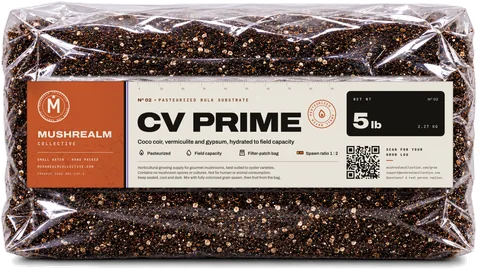
When a bag stops producing, you are left with a firm white brick of coir, vermiculite, leftover grain and mycelium. It will not grow another good indoor crop, but it is far too useful to throw in the trash. Here is what to do with it, what to avoid, and how to handle the blocks that went moldy.
Is it spent, and can you reuse it?
A block is spent when:
- each flush is much smaller than the one before,
- it shows little response two to three weeks after a proper rehydration,
- it has shrunk, pulled away from the bag and turned dry or crumbly, or
- mold starts to appear: green, black, pink or slimy patches. Old blocks lose the ability to fight off competitors.
Before you retire a block, give it one full rehydration and a fresh round of fruiting conditions. Our guide on how to get a second flush shows how.
Once it is spent, do not reuse it indoors or mix it into a fresh batch of substrate. The nutrients are largely used up, and a tired block is an easy target for mold, which you would then carry into your next grow. Outdoors is a different story.
The best uses at a glance
| Use | Best for | How | Watch out for |
|---|---|---|---|
| Compost | Any spent block, including moldy ones | Break up and mix with green waste | Break moldy blocks up outdoors |
| Mulch | Shrubs, fruit bushes, vegetable beds | Crumble into a layer 2 to 5 cm (1 to 2 in) deep | Keep it off stems and trunks |
| Soil amendment | Beds and potting mixes | Dig in, or mix in as a modest share | Do not plant into pure spent substrate |
| Worm bin | Small amounts at a time | Crumble and add gradually | Overloading makes the bin wet and smelly |
| Outdoor bed | Healthy blocks of native species | Bury in shady, moist wood chips or straw | Non-native species; wild mushrooms |
| Chicken run | Clean, fully dried material only | Compost first, or mix small amounts into bedding | Any mold; damp bedding |
Compost it
Composting is the simplest use and the one that suits every block, including contaminated ones.
- Break the block into small, crumbly pieces so it mixes in rather than sitting as a lump.
- Add it in layers with green material such as grass clippings, vegetable scraps or fresh plant trimmings. Coir is carbon-rich and slow to break down, so it needs that balance.
- Keep the heap as moist as a wrung-out sponge and turn it as you normally would.
The mycelium and leftover grain break down quickly. The vermiculite never rots, but it stays in the finished compost and helps it hold water and air.
One note on what you read online: a lot of advice about "spent mushroom compost" refers to the leftover compost from commercial button mushroom farms, which is made from composted straw and manure and is often high in soluble salts. A home block of coir, vermiculite and grain is a different material, so advice written for farm compost does not always apply.
Mulch and soil amendment
As a mulch
Crumble spent substrate into a layer 2 to 5 cm (1 to 2 in) deep around shrubs, fruit bushes or between vegetable rows. Coir holds moisture well, which helps in dry spells. Leave a small gap around stems and trunks, and top it with wood chips or leaves if it dries into a crust. White mycelium or the odd mushroom appearing in the mulch is normal.
As a soil amendment or in potting mix
Dig crumbled substrate into beds before planting to add organic matter and help the soil hold water. In pots, use it as a modest share of the mix, mixed with compost or potting mix, rather than the whole thing. Pure spent substrate holds a lot of water, is low in nutrients and may still be bound together by mycelium. Letting it sit and break down for a few weeks first, or composting it, makes it easier to work in.
Feed a worm bin
Composting worms happily eat mycelium and spent substrate, and coir is a common worm bedding in its own right. Crumble the block and add it a little at a time, the same way you would add food scraps. Spent substrate is wet, so balance it with dry shredded cardboard or paper, and hold back if the bin starts to smell or get soggy.
Bury it outdoors for a bonus flush
A healthy block of a native species can keep going outdoors once it has finished indoors.
- Use only clean blocks, with no sign of contamination.
- Choose a shady, sheltered spot that stays damp, such as under shrubs or along a north-facing wall.
- Dig a shallow trench, break the block into a few chunks and layer them with moist hardwood chips or straw.
- Cover with a few centimeters of chips or straw and water in dry weather.
- Wait. Oysters tend to fruit outdoors when the weather turns cool and wet, often in fall or spring. Treat anything you get as a bonus.
Keep golden oyster indoors. Golden oyster (Pleurotus citrinopileatus) is not native to North America. It has escaped from cultivation and is now spreading through forests in many US states, where researchers are concerned it competes with native wood-decay fungi. Never put golden oyster blocks outdoors: seal them in a bag and put them in the trash. The same goes for any other species that is not native where you live. The common oyster (Pleurotus ostreatus) is native to North America, and your local extension service can tell you what else is native in your area.
A safety note. Treat anything that comes up in an outdoor bed as a wild mushroom. Wild species can appear in the same spot as the one you planted, and some deadly species look like edible ones. Never eat a wild mushroom unless its identity has been confirmed by an experienced local expert. Our guide to deadly mushroom lookalikes explains why.
Chicken bedding: proceed with care
Spent substrate turns up in chicken runs, but it needs care.
- No mold, ever. Moldy bedding is a known cause of respiratory disease (aspergillosis) in poultry. Any block with visible contamination goes in the compost, not the coop.
- Dry it fully first. Crumble it and spread it out in the sun until completely dry. Damp bedding grows mold and bacteria.
- Mix, do not replace. Use small amounts mixed into your usual wood shavings or straw, and change it promptly if it gets damp.
Honestly, composting the blocks first and using the finished compost in the garden is the safer route. If you want your birds to have it directly, check with your vet first.
Disposal and contaminated blocks
Clean spent blocks can go in yard waste or food waste collection where your city or county accepts it. Do not leave them sitting indoors: they attract fungus gnats and fruit flies and soon grow mold. The plastic grow bag itself usually goes in the regular trash, unless your area takes soft plastics for recycling.
Contaminated blocks need more care, because opening them releases the contaminant into the air.
- Keep the bag sealed and take it outside before you do anything else.
- Either put it in an outdoor trash can still sealed, or break it up outdoors while wearing a mask and add it to a compost heap well away from where you grow.
- Wash your hands, and wipe down the spot where the bag was sitting.
Our grain spawn contamination guide helps you identify what you are dealing with. When you are ready to start again, our oyster mushroom varieties guide compares species, and a fresh bag of CV Prime gets the next grow going.
The short version
- A block is spent when flushes are tiny, it ignores rehydration, or mold appears.
- Do not reuse spent substrate indoors or mix it into a fresh grow.
- Compost it, crumble it as mulch, dig it into beds or feed it to a worm bin.
- Bury healthy blocks of native species in shady, moist wood chips or straw for a possible bonus flush.
- Never put golden oyster or other non-native species outdoors.
- Treat anything that fruits outdoors as a wild mushroom, and never eat one unless an experienced local expert has confirmed its identity.
- Keep contaminated blocks sealed until they are outside.
Frequently asked questions
Can you reuse spent mushroom substrate?
Is spent mushroom substrate good for plants?
Can I put old mushroom blocks in my compost bin?
Will a spent mushroom block fruit again outside?