Wild mushrooms don't read calendars. They respond to rain, temperature and the trees around them, so the same species can appear weeks apart from one year to the next, and months apart from one side of the country to the other. Use this guide as a map of what to look for and when, then learn each species in the field with an experienced local group. Never eat a wild mushroom unless an experienced local expert has confirmed its identity: some deadly species fruit in the same months, and the same places, as the edibles below.
How to read this calendar
The US is too big for one calendar. In the East and Midwest, morels mark spring and the main season runs from early summer into fall. In the Rockies, seasons follow elevation and snowmelt. On the Pacific coast, the main season follows the fall and winter rains, so California chanterelle hunters are busiest when New England is frozen. Read the ranges below as typical windows, and ask your local club what "on time" looks like where you live.
Two rules hold everywhere. First, mushrooms often appear a week or two after a good soaking rain in mild weather. Second, the deadliest mushrooms have seasons too, and they overlap with the edibles, so the deadly lookalikes guide is required reading before any season starts.
Spring
Morels are the headline act, typically March to June depending on latitude and elevation. In the East and Midwest they appear as the soil warms, often around dying elms, ash and old apple orchards. In the mountain West, foragers look for them in conifer forests the spring after a wildfire, into early summer at higher elevations. A true morel has a pitted honeycomb cap and is hollow from the tip of the cap to the base of the stem. False morels (Gyromitra) have brain-like folds and a chambered or cottony inside, and they are poisonous. Even true morels must be cooked thoroughly: raw or undercooked morels can make people ill.
Oyster mushrooms fruit on dead hardwood in cool, wet spells through spring, and chicken of the woods can start in late spring in warmer regions.
Summer
- Chanterelles fruit in the East and Midwest after summer rains, typically June to September, under oaks, beech, birch and hemlock. The jack-o'-lantern, which grows in clusters on wood, is the dangerous lookalike. See our chanterelle identification guide.
- Chicken of the woods forms orange and yellow shelves on hardwoods, especially oak. See our chicken of the woods guide.
- Black trumpets hide in moss under oaks and beech in the East from about July to September. They are easy to walk past: dark, funnel-shaped and thin-fleshed.
- Lion's mane begins in late summer on wounds in living hardwoods and on dead logs.
- Puffballs appear in lawns and meadows from late summer.
Fall
Fall is peak season across much of the country.
- Hen of the woods (maitake) forms large gray-brown rosettes at the base of oak trees, typically September to November in the East and Midwest. Mature oaks often produce in the same spot year after year.
- Honey mushrooms (Armillaria) grow in dense clusters on stumps, roots and wood. They come with real caveats: they must be cooked thoroughly, some people react badly even when they are, and the deadly galerina and jack-o'-lantern both grow on wood nearby. Treat them as an expert-only species.
- Lion's mane and oyster mushrooms fruit on hardwoods as nights cool.
- Chicken of the woods can continue into fall.
- Chanterelles start on the Pacific coast with the first heavy rains, under Douglas fir and hemlock in the Pacific Northwest.
In California, fall rains also bring the death cap under oaks. Learn it before you go.
Winter
- On the Pacific coast, winter is prime time: California golden chanterelles under live oaks, along with black trumpets and hedgehog mushrooms, fruit through the rainy season.
- Oyster mushrooms appear in mild, wet spells across much of the country.
- In the cold North, there is little to find until the snow melts, which makes winter the perfect time to study field guides and join club meetings.
The calendar at a glance
| Species | Typical season | Habitat | Watch out for |
|---|---|---|---|
| Morels | March to June (later at elevation) | Dying elms, ash, old orchards, Western burn sites | False morels |
| Chanterelles | June to September (East, Midwest); fall and winter (West Coast) | Oak, beech, hemlock; Douglas fir; live oak | Jack-o'-lantern, false chanterelle |
| Chicken of the woods | Late spring to fall | Hardwoods, especially oak | Gilled orange mushrooms on wood |
| Black trumpets | July to September (East); winter (California) | Moss under oaks and beech | Easy to miss, confirm in person |
| Lion's mane | Late summer to fall | Wounds on hardwoods, dead logs | Related tooth fungi |
| Puffballs | Late summer to fall | Lawns, meadows, woods | Young Amanitas, earthballs |
| Hen of the woods | September to November | Base of oak trees | Other large polypores |
| Honey mushrooms | Fall | Clusters on stumps and roots | Deadly galerina, jack-o'-lantern |
| Oyster mushrooms | Fall to spring, mild spells | Dead hardwood | Other pale shelf mushrooms |
How to plan your season
- Watch the rain gauge. After a good soaking in mild weather, plan a walk a week or two later.
- Keep a journal. Note the date, place, host trees and recent weather for every find. Within two or three years you will know your own local calendar better than any book.
- Revisit good spots. Bracket fungi and many woodland species fruit in the same places year after year.
- Join group forays at peak season. Your local NAMA-affiliated club will be out when the fruiting is best, and an expert eye on your basket is the best safety net there is.
- Check the rules before you go. Some parks and reserves ban picking, and others need a permit.
New to all this? Start with our mushroom foraging for beginners guide.
Out of season? Grow your own
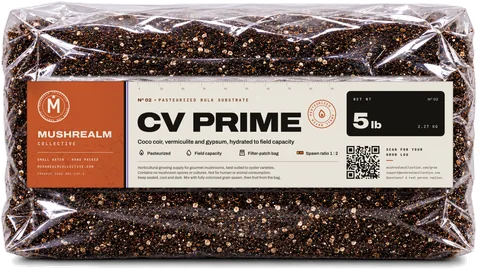
The one gourmet mushroom with no closed season is the one you grow yourself. Oyster mushrooms fruit indoors all year at ordinary room temperatures, with zero identification risk. Our guide to the easiest mushrooms to grow at home is the place to start, and our grow kit pairs a sterilized grain bag with CV Prime substrate, so you only add live oyster mycelium. For the colors you see in the woods, try golden and pink oysters: see our oyster mushroom varieties guide.
The short version
- Spring means morels; summer brings chanterelles, chicken of the woods and black trumpets; fall brings hen of the woods, honey mushrooms and lion's mane; winter is chanterelle season on the West Coast.
- Rain and mild temperatures matter more than the date.
- Deadly species fruit in the same months as the edibles.
- Never eat a wild mushroom unless an experienced local expert has confirmed it.
Frequently asked questions
When is mushroom season in the US?
What weather brings mushrooms out?
What mushrooms can you forage in spring?
Can you forage mushrooms in winter?