"Oyster mushroom" covers a whole family of species and strains, and they are not interchangeable. Some fruit in a cold garage, some sulk below 20°C (68°F). Some keep two weeks in the fridge, some barely two days. Here is how the seven oyster varieties we get asked about compare, so you can choose the right one for your room and your kitchen.
Oyster varieties at a glance
Fruiting temperatures are the comfortable range for each. Most strains tolerate a few degrees either side, just more slowly.
| Variety | Species | Fruiting temperature | Flavor and texture | Fridge life | Best substrate |
|---|---|---|---|---|---|
| Blue oyster | Pleurotus ostreatus (blue strains) | 13 to 21°C (55 to 70°F) | Mild, savory, tender | 4 to 7 days | Coir and vermiculite, straw, sawdust |
| Pearl oyster | Pleurotus ostreatus | 13 to 24°C (55 to 75°F) | Mild, slightly sweet, tender | 4 to 7 days | Coir and vermiculite, straw, sawdust |
| Pink oyster | Pleurotus djamor | 20 to 29°C (68 to 84°F) | Rich and chewy when cooked | 2 to 3 days | Coir and vermiculite, straw |
| Golden oyster | Pleurotus citrinopileatus | 18 to 29°C (64 to 84°F) | Nutty, delicate, thin | 2 to 3 days | Coir and vermiculite, straw |
| King oyster | Pleurotus eryngii | 15 to 20°C (59 to 68°F) | Firm, meaty, savory | 7 to 14 days | Supplemented hardwood sawdust |
| Phoenix (Italian) oyster | Pleurotus pulmonarius | 18 to 27°C (65 to 80°F) | Mild, tender, thinner caps | 4 to 7 days | Coir and vermiculite, straw, sawdust |
| Elm oyster | Hypsizygus ulmarius | 15 to 21°C (60 to 70°F) | Firm, mild, holds its shape | About 7 days | Hardwood sawdust, straw |
Blue and pearl oyster: the cool-weather all-rounders
These are the varieties we recommend for a first grow. Both are forms of Pleurotus ostreatus, the classic oyster mushroom, and both colonize fast, resist mold well and fruit in big, layered clusters.
- Blue oyster gives dark blue-gray caps when fruited cool. In a warm room the caps come out paler and grayer, which is normal. It is one of the most cold-tolerant oysters, so it suits a garage, basement or fall windowsill.
- Pearl oyster has pale gray to cream caps and handles slightly warmer conditions.
In the kitchen they are mild and savory, with tender caps and slightly chewier stems. They take on browning beautifully in a dry pan; see how to cook oyster mushrooms.
Pleurotus ostreatus also grows wild on dead hardwood. If you forage, never eat a wild mushroom unless its identity has been confirmed by an experienced local expert, and remember that some deadly species look like edible ones.
Pink oyster: fastest, but hates the cold
Pleurotus djamor is a tropical species and the speed champion of the family. In a warm room it can go from spawning to harvest in about two weeks, with ruffled, coral-pink clusters.
What to know before you grow it:
- Keep it warm. It colonizes and fruits best at 24 to 29°C (75 to 85°F). Below about 18°C (65°F) it stalls.
- Never refrigerate it. Cold can damage pink oyster mycelium, so colonized grain and bags should stay at room temperature.
- Harvest young, while the cap edges are still curled. Over-mature pinks turn tough.
- Cook it the same day if you can. It keeps only two or three days.
The pink color fades to tan-orange in the pan. Cook it thoroughly and it turns chewy and rich; some cooks compare it to ham or bacon when fried until crisp.
Golden oyster: beautiful, fragile, grow it responsibly
Pleurotus citrinopileatus forms bright lemon-yellow bouquets with thin, delicate caps. It likes the same warmth as pink oyster and is nearly as easy. The flavor is nutty and the texture tender, but the caps shatter if you handle them roughly and dry out fast, so it is rarely sold fresh in stores. That makes it a great one to grow yourself.
Golden oyster has escaped cultivation in the United States and is now established in the wild across many states. Researchers have found that dead trees it colonizes host noticeably fewer native fungi. If you grow it:
- Fruit it indoors only, never in an outdoor bed or on logs.
- Harvest before the caps flatten and the clusters age.
- Seal spent blocks in a bag and put them in the trash. Do not compost them outdoors or tip them into woodland.
King oyster: the meaty one that wants sawdust
Pleurotus eryngii is the odd one out. Instead of shelf-like clusters it grows thick white stems with small brown caps, and the stem is the prize. Sliced into rounds and seared, it has a firm, almost scallop-like bite, and it keeps 7 to 14 days in the fridge, far longer than any other oyster.
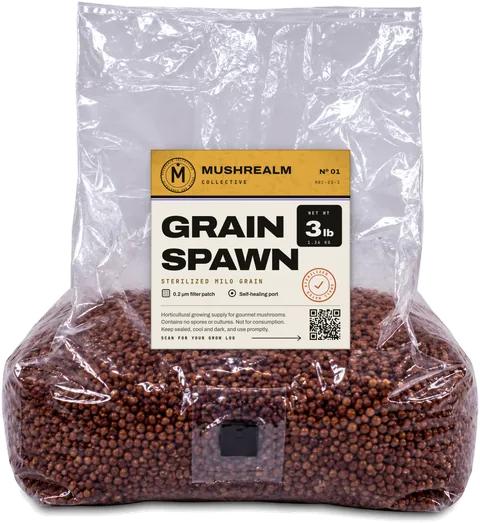
It is also harder to grow. King oyster wants supplemented hardwood sawdust that has been sterilized, cooler fruiting conditions around 15 to 20°C (59 to 68°F), and usually gives one main flush. Coir and vermiculite is not the right bulk for it. Our grain spawn still works as the starting point: colonize the grain with king oyster, then use it to spawn sawdust blocks.
Phoenix and elm oyster: summer and steady
Phoenix oyster (Pleurotus pulmonarius), also sold as Italian oyster or summer oyster depending on the strain, is the answer for warm months when blue oyster struggles. It fruits happily up to about 27°C (80°F), grows on the same substrates as blue and pearl, and has slightly smaller, paler, thinner caps with a mild flavor.
Elm oyster (Hypsizygus ulmarius) is not a true Pleurotus at all, though it looks and cooks like one. It produces larger, thicker caps, often singly or in small groups, with a firm texture that holds its shape in soups and stews. It keeps well, about a week in the fridge. It is a little slower to colonize than true oysters and does best on hardwood sawdust or straw.
Which variety should you grow?
The easiest way to choose is by the temperature of the room you will fruit in.
| Your fruiting room | Grow this | Why |
|---|---|---|
| Below 18°C (65°F) | Blue oyster | Fruits well cool, darkest color |
| 18 to 22°C (65 to 72°F) | Pearl, blue or elm oyster | The comfortable middle |
| 22 to 27°C (72 to 80°F) | Phoenix, golden or pink oyster | Warmth-loving and fast |
| Above 27°C (80°F) | Pink oyster | Thrives where others stall |
| Cool room, wood setup | King oyster | Best texture and shelf life, needs sawdust |
Growing tips for every oyster
A few rules hold across the whole family:
- Fresh air beats everything. Oysters are sensitive to carbon dioxide. Long stems and small caps mean they need more air exchange.
- Humidity around 85 to 95%. Mist the walls of the fruiting container, not the clusters themselves.
- Harvest the whole cluster at once while the cap edges still curl downward. Twist it off at the base.
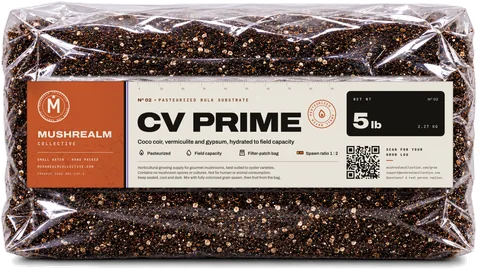
- Use the right bulk. Blue, pearl, pink, golden and phoenix fruit beautifully on CV Prime, our pasteurized coir and vermiculite. Mix colonized grain spawn in at about 1 : 2 grain to substrate by weight and fruit straight from the bag. The step-by-step method is in how to grow oyster mushrooms on CV substrate.
- Rest and rehydrate between flushes. See how to get a second flush.
For fruiting room setup, our guide to mushroom fruiting conditions covers light, air and humidity in detail.
The short version
- Blue and pearl oyster are the easiest and most forgiving. Blue is the pick for cool rooms.
- Pink and golden oyster love warmth, grow fast and must be eaten within two or three days.
- Phoenix (Italian) oyster fills the summer gap when blue oyster struggles.
- King oyster has the best texture and shelf life but needs supplemented hardwood sawdust.
- Elm oyster is firm, keeps well and is a little slower to colonize.
- US growers should fruit golden oyster indoors only and put spent blocks in the trash.
- Store all of them in a paper bag in the fridge; our mushroom storage guide has the details.
Frequently asked questions
What is the difference between blue and pearl oyster mushrooms?
Which oyster mushroom tastes best?
Which oyster mushroom is easiest to grow?
How long do oyster mushrooms last in the fridge?
Is golden oyster mushroom invasive?