Wild mushrooms don't read calendars. They respond to rain, temperature and the trees around them, so the same species can appear weeks apart from one year to the next, and at different times in the south of England and the Scottish Highlands. Use this guide as a map of what to look for and when, then learn each species in the field with an experienced local group. Never eat a wild mushroom unless an experienced local expert has confirmed its identity: some deadly species fruit in the same months, and the same places, as the edibles below.
How to read this calendar
The UK has a short spring season, a summer that depends heavily on rain, a big autumn flush from September to November, and a handful of cold-tolerant species through winter. Expect things to start earlier in the mild, wet south and west, and later or more briefly in the north and in the uplands. A dry August can push the whole autumn season back; a wet, warm September can make it spectacular.
Two rules hold everywhere. First, mushrooms often appear a week or two after a good soaking rain in mild weather. Second, the deadliest mushrooms have seasons too, and they overlap with the edibles, so the deadly lookalikes guide is required reading before any season starts.
Spring
St George's mushroom (Calocybe gambosa) is named for St George's Day, 23 April, and fruits from around late April to June in grassland, field edges, road verges and woodland margins, often in rings or arcs. It is a chunky, cream-white mushroom with crowded white gills and a strong mealy smell, like wet flour. The danger is the deadly fibrecap, which bruises red, lacks the mealy smell and usually appears from late June, plus several poisonous white funnel mushrooms. That overlap in early summer is exactly why expert confirmation matters.
Morels (Morchella) fruit from March to May. They are native but genuinely scarce in the UK, turning up on rich, lime-rich soil under trees and hedges, in gardens and on bark chippings. A true morel has a honeycomb of pits and is hollow from the tip of the cap to the base of the stem. The false morel has brain-like folds and a chambered or cottony inside, and it is poisonous. Even true morels are poisonous raw and must be cooked thoroughly.
Summer
Summer is hit and miss: in a wet year it can be excellent, in a dry one there may be almost nothing until September.
- Chicken of the woods is at its best in early summer, as bright orange and sulphur-yellow brackets on oak, sweet chestnut, willow and cherry. Never eat it from yew. See our chicken of the woods guide.
- Chanterelles start from around July in mossy woods under birch, beech, oak and conifers. The chanterelle identification guide covers the false chanterelle and the deadly webcaps.
- Giant puffballs, ceps and field mushrooms begin to appear from late summer, especially after thunderstorms.
Autumn
This is the main event, from September to November. Alongside the late chanterelles, look for:
- Cep (penny bun) under oak, beech, birch and pine: a brown cap on a fat, pale stem with a fine white net pattern near the top, and pores instead of gills.
- Hedgehog fungus (Hydnum repandum): a pale, buff cap with soft spines underneath instead of gills, in beech, oak and conifer woods.
- Field mushroom in grazed pasture: pink gills that turn chocolate brown. Check for the yellow stainer, which stains bright yellow at the base of the stem when cut.
- Shaggy inkcap on grass verges and disturbed ground: eat only young, white specimens before the gills start turning black, and don't confuse it with the common inkcap, which causes a nasty reaction if eaten with alcohol.
- Giant puffball in grassland and nettle beds: it must be pure white and firm all the way through when cut top to bottom.
- Beefsteak fungus on oak and sweet chestnut: a liver-red bracket that "bleeds" red juice.
Autumn is also peak season for the death cap, destroying angel, deadly webcap and funeral bell. Learn them before you go.
Winter
- Wood blewit (Clitocybe nuda) appears from around October and often lasts into December or later in mild winters, in leaf litter, hedges and compost heaps. It is lilac to violet with a fragrant smell. The danger is violet webcaps (Cortinarius), which have a cobwebby veil under the cap when young and gills that turn rusty brown. Blewits must be cooked thoroughly.
- Oyster mushrooms fruit on dead beech and other hardwoods through cold spells.
- Jelly ear grows on elder all year and is most obvious in winter, as soft, brown, ear-shaped flaps.
The calendar at a glance
| Species | Typical months | Habitat | Watch out for |
|---|---|---|---|
| St George's mushroom | April to June | Grassland, verges, woodland edges | Deadly fibrecap, white funnels |
| Morel | March to May | Lime-rich soil, hedges, bark chippings | False morel |
| Chicken of the woods | May to October | Oak, sweet chestnut, willow, cherry | Never eat from yew |
| Chanterelle | July to November | Mossy woods: birch, beech, oak, conifers | False chanterelle, webcaps |
| Giant puffball | July to October | Grassland, nettles, field edges | Young Amanitas, earthballs |
| Cep (penny bun) | August to November | Oak, beech, birch, pine | Bitter and poisonous boletes |
| Hedgehog fungus | August to November | Beech, oak and conifer woods | Other tooth fungi |
| Field mushroom | August to October | Grazed pasture | Yellow stainer, destroying angel |
| Beefsteak fungus | August to November | Oak, sweet chestnut | Confirm in person |
| Shaggy inkcap | September to November | Verges, lawns, disturbed ground | Common inkcap |
| Wood blewit | October to December | Leaf litter, hedges, compost | Violet webcaps |
| Oyster mushroom | All year, mainly October to March | Dead hardwood | Other pale brackets |
| Jelly ear | All year, mainly winter | Elder | Other jelly fungi |
How to plan your season
- Watch the rain gauge. After a good soaking in mild weather, plan a walk a week or two later.
- Keep a journal. Note the date, place, host trees and recent weather for every find. Within two or three years you will know your own local calendar better than any book.
- Revisit good spots. Bracket fungi and many woodland species fruit in the same places year after year.
- Join group forays at peak season. Your local fungus group will be out when the fruiting is best, and an expert eye on your basket is the best safety net there is.
- Check the rules before you go. Some parks and reserves ban picking, and others need a permit.
New to all this? Start with our mushroom foraging for beginners guide.
Out of season? Grow your own
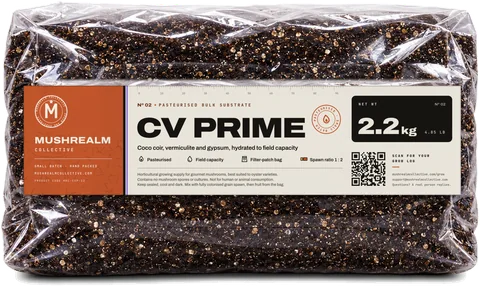
The one gourmet mushroom with no closed season is the one you grow yourself. Oyster mushrooms fruit indoors all year at ordinary room temperatures, with zero identification risk. Our guide to the easiest mushrooms to grow at home is the place to start, and our grow kit pairs a sterilised grain bag with CV Prime substrate, so you only add live oyster mycelium. Wild lion's mane is a protected species in the UK and must never be picked, but you can grow it: see our lion's mane guide.
The short version
- Spring brings St George's mushrooms and scarce morels; summer brings chicken of the woods and chanterelles; autumn is peak season for ceps, hedgehogs, field mushrooms and puffballs; winter brings blewits, oysters and jelly ears.
- Rain and mild temperatures matter more than the date.
- Deadly species fruit in the same months as the edibles.
- Never eat a wild mushroom unless an experienced local expert has confirmed it.
Frequently asked questions
When is mushroom season in the UK?
What weather brings mushrooms out?
What mushrooms can you forage in spring?
Can you forage mushrooms in winter?