Some gourmet mushrooms will fruit on a kitchen shelf with very little help. Others need sterilised sawdust, months of patience or a compost pile. If this is your first grow, picking the right species matters more than any piece of equipment. Here is how eight popular gourmet mushrooms rank on ease, based on what we see on the MushRealm bench.
How we ranked them
We scored each species on five things that decide whether a first grow succeeds:
- Speed. The faster the mycelium claims its substrate, the less chance mould has to get in.
- Vigor. Aggressive species shrug off small mistakes in clean technique.
- Substrate. Can it fruit on a simple pasteurised mix, or does it need supplemented hardwood that must be fully sterilised?
- Temperature range. Species that fruit across a wide range suit a normal home.
- Forgiveness. How badly do dry air, low fresh air or late harvesting hurt the crop?
The ranking at a glance
Days to first harvest are counted from the day colonised grain is mixed into the bulk substrate, at the right temperature.
| Rank | Species | Best substrate | Fruiting temperature | Days to first harvest | Difficulty |
|---|---|---|---|---|---|
| 1 | Blue and pearl oyster | Coir and vermiculite, straw, hardwood sawdust | 13 to 21°C (55 to 70°F) | 21 to 35 | Very easy |
| 2 | Pink oyster | Coir and vermiculite, straw | 20 to 29°C (68 to 84°F) | 14 to 28 | Very easy in a warm room |
| 3 | Golden oyster | Coir and vermiculite, straw | 18 to 29°C (64 to 84°F) | 21 to 30 | Easy |
| 4 | Wine cap | Hardwood chip bed outdoors | Mild outdoor weather | 60 to 180 | Easy but slow |
| 5 | Lion's mane | Supplemented hardwood sawdust | 18 to 24°C (64 to 75°F) | 35 to 50 | Moderate |
| 6 | King oyster | Supplemented hardwood sawdust | 15 to 20°C (59 to 68°F) | 40 to 60 | Moderate |
| 7 | Shiitake | Supplemented sawdust blocks or oak logs | 13 to 21°C (55 to 70°F) | 60 to 120 on blocks, 6 to 18 months on logs | Moderate and slow |
| 8 | Button and chestnut | Composted substrate plus a casing layer | 16 to 18°C (60 to 65°F) | 35 to 60 after composting | Hard from scratch |
The eight species, in order
1. Blue and pearl oyster (Pleurotus ostreatus)
The easiest gourmet mushroom by a distance. Its mycelium is fast and dense, so it usually claims a substrate before competing moulds can take hold. It fruits on coir and vermiculite, pasteurised straw or hardwood sawdust, and it copes with anything from a cool garage to a mild living room. Blue strains give steel-blue caps in cool rooms that fade toward grey as they grow; pearl strains are paler. Expect two or three flushes from one bag.
The one thing oysters demand is fresh air. Starve them of it and you get long stems with tiny caps. Our full walkthrough is in how to grow oyster mushrooms on CV substrate.
2. Pink oyster (Pleurotus djamor)
The fastest grower on this list and the most striking, with coral-pink clusters that can appear within two weeks of spawning. It needs warmth: below about 18°C (65°F) it slows right down. It also dislikes cold, so never refrigerate colonised pink oyster grain or bags. The catch is shelf life: pink oysters keep only two or three days after harvest, so plan to cook them quickly.
3. Golden oyster (Pleurotus citrinopileatus)
Bright yellow, nutty and almost as easy as pink oyster, with the same love of warmth. The clusters are fragile and the thin caps bruise and dry out fast, so handle them gently and harvest young.
Golden oyster is not native to the UK, so we suggest growing it indoors and disposing of spent blocks in your general waste rather than in a garden, compost heap or woodland.
You can compare it with the other oysters in our guide to oyster mushroom varieties.
4. Wine cap (Stropharia rugosoannulata)
The easiest outdoor mushroom. Mix spawn into a bed of fresh hardwood chips or straw in a shady corner, keep it damp, and large burgundy caps appear from late spring into autumn. There is almost no equipment involved, but it is slow and you cannot control when it fruits. Harvest young, before the caps flatten.
Outdoor beds also attract wild mushrooms, some of them dangerous. Never eat a wild mushroom unless its identity has been confirmed by an experienced local expert, and remember that some deadly species look like edible ones. Only eat what you are certain is your wine cap.
5. Lion's mane (Hericium erinaceus)
A white, shaggy head of soft spines with a texture often compared to crab. It is a wood lover, so it fruits best on supplemented hardwood sawdust that has been sterilised, not just pasteurised. It is also fussy about humidity: dry air turns the spines yellow and stubby. Our lion's mane guide covers growing and cooking it.
6. King oyster (Pleurotus eryngii)
Thick, meaty white stems and the longest shelf life of any oyster. It is less forgiving than its cousins: it wants supplemented sawdust rather than coir, cooler fruiting temperatures, and the first flush is usually the main one.
7. Shiitake (Lentinula edodes)
Not hard so much as slow. On logs the work is mostly one afternoon of drilling, then 6 to 18 months of waiting. On sawdust blocks you need sterilised substrate, a long incubation while the block turns brown, then a cold soak to trigger fruiting. Details are in our shiitake growing guide.
8. Button and chestnut (Agaricus bisporus)
The supermarket mushroom is surprisingly tricky from scratch. It grows on a specially composted substrate, needs a casing layer on top and wants steady cool temperatures. White button, chestnut and portobello mushrooms are all this one species: chestnut and portobello are a brown strain picked young and mature. If you want to try it, a pre-spawned compost kit is the sensible route.
Your first grow: what we would do
- Pick blue or pearl oyster. If your room sits above 22°C (72°F) most of the year, pink oyster is just as easy.
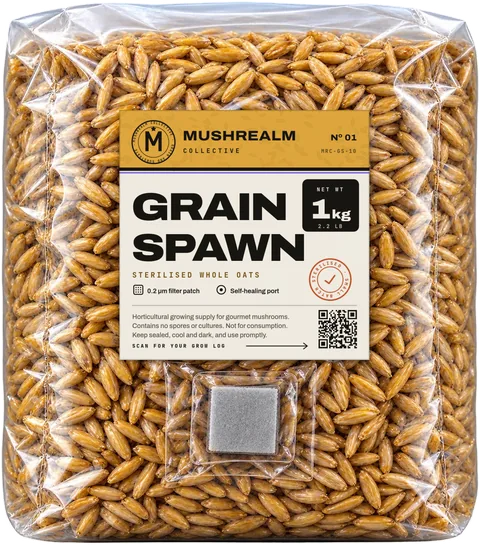
- Inoculate a sterilised grain bag with live mycelium of the species, such as a commercial grain spawn or a liquid inoculant, through the self-healing injection port.
- Colonise the grain at 21 to 24°C (70 to 75°F) for roughly 10 to 21 days, until it is white all the way through.
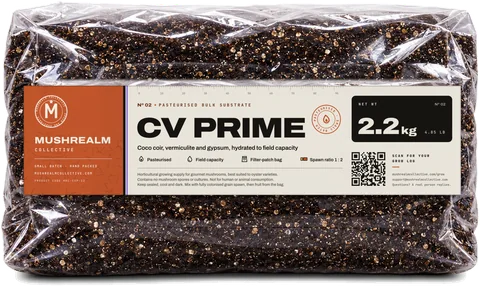
- Mix it into substrate at about 1 : 2 grain to substrate by weight. Our grow kit pairs a 1 kg oat grain bag with 2.2 kg of CV Prime at that ratio. For bigger batches, use the grain and substrate planner.
- Let the bulk colonise for 10 to 14 days in the same warm, dim spot.
- Start fruiting. Open the bag or cut slits, give indirect light, 85 to 95% humidity and fresh air several times a day. Our guide to mushroom fruiting conditions has the details.
- Harvest the whole cluster while the cap edges still curl downward, then rest and rehydrate the block for a second flush.
Why the wood lovers rank lower
Shiitake, lion's mane and king oyster evolved to break down hardwood, and they fruit best on hardwood sawdust enriched with bran. That extra nutrition also feeds moulds and bacteria, so supplemented sawdust must be fully sterilised in a pressure cooker or steam steriliser, not just pasteurised. That is the real jump in difficulty.
We do not sell sawdust. Our CV Prime is made for oysters. But our grain spawn, once colonised with a wood-loving species, is exactly what you use to spawn sawdust blocks or make sawdust spawn for logs.
Beginner problems that matter more than species
| What you see | Likely cause | Fix |
|---|---|---|
| Long stems, tiny caps | Too little fresh air | Fan or open the container several times a day |
| Pins form, then dry and stall | Humidity too low | Mist the walls, not the mushrooms; keep the cut surface moist |
| Green or black patches | Contamination | Seal it in a bag, throw it away outside and review your clean technique |
| Nothing after 3 weeks of fruiting | Too warm or cold for the species | Match the species to your room temperature |
Most failed first grows come down to one of these. Our list of common mushroom growing mistakes goes deeper.
The short version
- Start with blue or pearl oyster. Choose pink oyster if your home runs warm.
- Oysters fruit happily on coir and vermiculite; wood lovers need supplemented, sterilised hardwood sawdust.
- Wine caps are the easy outdoor option, but only eat what you are certain is yours.
- Shiitake and lion's mane are great second projects once you can handle sawdust.
- Fresh air, humidity and harvest timing decide more first grows than species does.
Frequently asked questions
What is the easiest mushroom to grow for a beginner?
Can you grow mushrooms indoors without special equipment?
Which mushrooms are hardest to grow at home?
How long does it take to grow mushrooms at home?