The rule is simpler than most forum threads make it look: the more food a substrate contains, the harder you have to heat it. Low-nutrient bulk gets pasteurised. Rich, starchy or supplemented material gets sterilised. Here are the temperatures and times, which substrates need which treatment and why, the main methods, and why grain is never just boiled.
The difference at a glance
| Pasteurisation | Sterilisation | |
|---|---|---|
| Temperature | 60 to 80°C (140 to 176°F) | 121°C (250°F) |
| Time | Usually 1 to 2 hours | About 90 minutes to 2.5 hours or more at 15 psi, depending on the load |
| Equipment | Bucket, large pot, drum or steam | Pressure cooker, or an autoclave |
| What survives | Some heat-tolerant, mostly harmless microbes | Essentially nothing |
| Used for | CV, straw, plain hardwood pellets, casing layers | Grain, supplemented sawdust, masters mix |
| Afterwards | Copes with brief open-air handling | Must stay sealed until inoculation |
What pasteurisation does
Pasteurisation heats a substrate enough to kill most moulds, active bacteria, insects and other pests, but not everything. Some heat-tolerant microbes survive. In a low-nutrient material those survivors do little harm, and they occupy space a contaminant would otherwise take.
Combine that with a substrate that offers little food and a generous amount of grain spawn, and the mycelium wins the race.
Hotter isn't better. Holding much above 80°C (176°F) for long periods starts killing the harmless survivors too, without reliably killing everything else. That leaves the substrate open to whatever lands on it first.
What sterilisation does
Sterilisation aims to kill every living thing in the substrate, including bacteria in their dormant, heat-resistant form, which can survive boiling.
Boiling water can't get hotter than 100°C (212°F) at sea level. Inside a sealed pressure vessel at 15 psi, steam reaches 121°C (250°F), and that is the temperature that does the job.
Time depends on how long the centre of the load takes to heat through:
- Quart jars of grain: about 90 minutes at 15 psi.
- Bags of grain or supplemented sawdust of around 2.5 kg (5 lb): 2.5 hours or more.
Start the timer when the gauge reaches 15 psi, and let the cooker cool and depressurise on its own. Releasing the pressure fast can burst bags and pull unfiltered air into jars.
Most electric multicookers don't reach 15 psi, so they are not reliable for sterilising. Some small farms sterilise supplemented sawdust with many hours of steam at normal pressure in drums instead; it can work, but it is far less forgiving.
Which substrates need which, and why
The deciding factor is food. On easy nutrients like starch, sugar and protein, moulds and bacteria grow much faster than mushroom mycelium. Give them a rich substrate with any survivors in it and they win. Give them a low-nutrient one and they struggle, while the mycelium, fed by its grain, races ahead.
| Substrate | Nutrient level | Treatment |
|---|---|---|
| CV (coco coir and vermiculite) | Low | Pasteurise |
| Straw | Low | Pasteurise |
| Plain hardwood pellets or sawdust | Low | Pasteurise |
| Casing layers | Low | Pasteurise |
| Fresh coffee grounds | Moderate | Brewing heat-treats them; use within a day |
| Grain | High | Sterilise |
| Supplemented sawdust (with bran) | High | Sterilise |
| Masters mix (sawdust and soy hulls) | High | Sterilise |
| Button mushroom compost | High | Controlled composting, then pasteurisation |
That last row is the interesting exception. Compost for button mushrooms is rich, but it goes through a long, managed composting process that leaves a community of microbes favouring the mushroom. It is pasteurised, not sterilised, to keep that community alive.
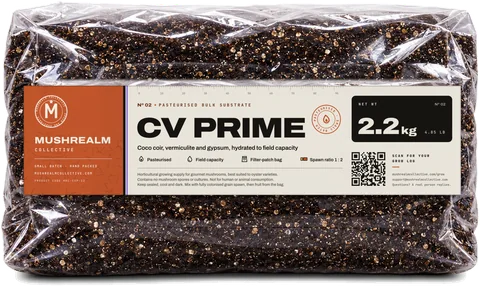
Why not sterilise everything? For low-nutrient bulk it is unnecessary work, and many growers find a sterilised bulk substrate more vulnerable if it gets exposed during spawning, because nothing is left in it to compete with a contaminant. CV Prime is pasteurised for that reason. For the full rundown of what each material is good for, see mushroom substrate types.
Pasteurisation methods
Bucket method (best for CV)
Pour boiling water over dry coir and vermiculite in a lidded bucket, wrap it in a towel and leave it 6 to 8 hours. The mix starts inside the pasteurisation range and cools slowly through it. The full recipe is in our coco coir vermiculite ratio guide.
Hot water bath (best for straw)
- Chop straw into 5 to 10 cm (2 to 4 in) lengths and pack it into a mesh bag or pillowcase.
- Heat water to 65 to 80°C (149 to 176°F) in a large pot on the hob, or in a metal drum over an outdoor burner for big batches.
- Submerge the straw, weighed down, and hold the temperature for 1 to 2 hours. Check it with a thermometer.
- Lift it out, drain until it stops dripping, and cool it to room temperature before spawning.
Steam
Steam passed through substrate in an insulated box or drum pasteurises larger batches without a tank of hot water. Put a probe thermometer in the middle of the load, which heats last, and hold that reading at 60 to 80°C (140 to 176°F) for at least 1 to 2 hours.
Cold lime soak (no heat)
Hydrated lime (calcium hydroxide) dissolved in water raises the pH to around 12, which most contaminants can't survive. Mix roughly 2 to 3 g of hydrated lime per litre of water (about 8 to 11 g per US gallon), submerge chopped straw for 12 to 24 hours, then drain it well. Oysters handle the alkaline straw that results.
Use hydrated lime, not garden lime or dolomite lime, which won't raise the pH far enough. Hydrated lime is caustic, so wear gloves and eye protection.
Why grain must be sterilised
Grain is the richest material in a mushroom grow, full of the starch and protein that moulds and bacteria love. It also naturally carries bacteria that survive boiling in a dormant, heat-resistant form. Simmer grain in a pot, bag it and keep it warm, and those bacteria wake up first, turning the bag sour and slimy before the mycelium gets going.
Only pressure sterilisation at 121°C (250°F) reliably kills them, which is why grain spawn always comes out of a pressure cooker or autoclave.
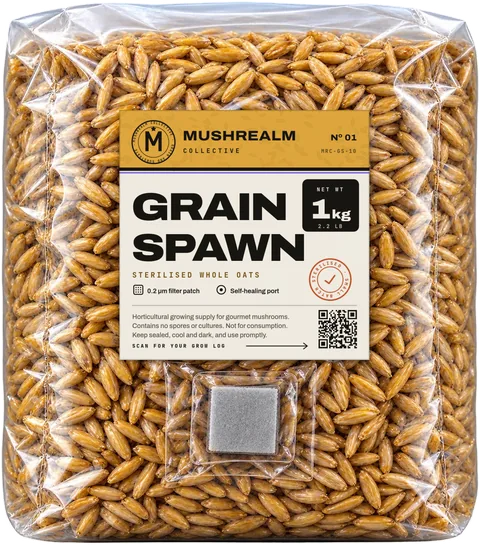
Our grain spawn bags are fully hydrated, pressure-sterilised and sealed with a 0.2 micron filter patch and a self-healing injection port, so you don't need a pressure cooker at all. You inoculate with live mycelium of a gourmet species, such as a colonised grain transfer from a previous bag, through the injection port. See how to inoculate grain spawn bags, and keep the grain spawn contamination guide handy.
Common mistakes
- Pasteurising a rich mix. Bran-supplemented sawdust or masters mix that has only been pasteurised is very likely to contaminate.
- Boiling grain and calling it sterile. Boiling hydrates grain; it does not sterilise it.
- Overcooking straw. A hard boil for hours is no better than holding 65 to 80°C (149 to 176°F), and can be worse.
- Timing from the wrong moment. Start the clock when the core of the substrate reaches temperature, or when the gauge reaches 15 psi, not when the burner goes on.
- Spawning into warm substrate. Wait until it is at room temperature, below about 27°C (80°F).
- Opening sterilised bags before inoculation. Once opened, a sterilised substrate has no defenses.
The short version
- Pasteurise at 60 to 80°C (140 to 176°F) for 1 to 2 hours. Sterilise at 121°C (250°F) and 15 psi.
- Low-nutrient bulk (CV, straw, plain pellets) is pasteurised. Rich material (grain, supplemented sawdust, masters mix) is sterilised.
- Methods: a bucket for CV, a hot water bath or cold lime soak for straw, steam for big batches.
- Grain must always be pressure sterilised; boiling isn't enough.
- No pressure cooker? Buy pre-sterilised grain and pair it with a pasteurised bulk like CV.
Frequently asked questions
What temperature pasteurises mushroom substrate?
Do I need to sterilise CV substrate?
Is boiling enough to sterilise grain?
Can you sterilise substrate without a pressure cooker?
Can I pasteurise straw without heating it?